What is the best way to plan Batting practice?
The best batting practice follows a structured plan that keeps players active, maximizes repetitions, and focuses on specific development goals. Organizing batting practice into timed segments with multiple stations helps coaches improve player skills, reduce downtime, and make the most of every minute on the field.
TL;DR
An organized batting practice plan helps players develop faster while making coaching more efficient. By creating a clear practice plan, using multiple stations, and choosing equipment that keeps players moving, coaches can increase repetitions, improve safety, and build stronger baseball programs. This guide walks through planning practices that maximize player development for youth, high school, college, and travel baseball teams.
Every coach has experienced it.
Practice starts five minutes late.
Players gather around waiting for instructions.
Equipment still needs to be moved onto the field.
The first fifteen minutes disappear before meaningful work even begins.
Now compare that to a batting practice where every player knows exactly where to go, every station is ready before warmups begin, and coaches spend their time teaching instead of organizing.
The difference isn’t better athletes.
It’s better planning.
An efficient batting practice doesn’t happen by chance. It happens because coaches create a system that keeps players moving, maximizes repetitions, and focuses every drill on player development.
Whether you coach a youth league, a high school varsity team, a college program, or a year-round training facility, the principles are the same:
- Plan every minute.
- Keep players active.
- Eliminate unnecessary waiting.
- Create purpose behind every drill.
- Make player development the priority.
When batting practices are organized, everyone benefits. Players stay engaged, coaches spend more time teaching, and the entire program becomes more productive.
Table of Contents
Why Every BaTting Practice Needs a Plan
Many coaches begin practice with a list of drills.
Successful coaches begin with a goal.
Instead of asking:
“What should we do today?”
Ask:
“What do my players need to improve today?”
That simple shift changes everything.
Every activity should support one or two specific objectives. Whether the focus is improving and refining swing mechanics, increasing pitching command, or preparing for an upcoming opponent, every drill should move players closer to that goal.
A written batting practice plan also provides consistency throughout the season. Players know what to expect, assistant coaches understand their responsibilities, and practice transitions become smoother.
Well-planned practices also help coaches adapt when weather changes, field availability becomes limited, or roster sizes fluctuate.
Planning isn’t about making practice rigid.
It’s about making every minute count.
The Building Blocks of Every Great Practice
Although every baseball program has different needs, the most productive batting practices include the same core components.
Dynamic Warm-Up
A proper warm-up prepares athletes both physically and mentally.
Rather than standing in lines stretching, players should begin with dynamic movement that increases body temperature, improves mobility, and prepares baseball-specific movements.
Examples include:
- High knees
- Carioca
- Walking lunges
- Arm circles
- Shoulder activation
- Sprint mechanics
A quality warm-up reduces injury risk while preparing players to perform at a higher level.
Throwing Progression
Throwing should be intentional.
Players should gradually increase throwing distance while focusing on proper mechanics, footwork, and communication.
A consistent throwing progression prepares athletes for defensive drills while reinforcing fundamentals every day.
Defensive Fundamentals
Every practice should include defensive work.
Depending on the team’s needs, coaches may focus on:
- Infield fundamentals
- Outfield communication
- Double plays
- Cutoff situations
- Relays
- First-and-third defense
- Bunt defense
Breaking players into smaller groups allows coaches to provide more instruction while increasing repetitions.
Offensive Development
Offensive work extends beyond batting practice.
Players should continue developing:
- Bunting
- Base running
- Situational hitting
- Hit-and-run execution
- Reading pitchers
- Lead-offs
- Sliding techniques
Game situations often determine outcomes more than raw talent.
Batting Practice
Batting practice should be organized—not simply a line of players waiting for one swing.
Using multiple hitting stations allows players to receive more quality repetitions while coaches focus on specific skills.
Stations might include:
- Live batting practice
- Front toss
- Soft toss
- Tee work
- Timing drills
- Pitch recognition
Organized batting practice keeps players engaged while maximizing valuable swings.
Read More: How to Run More Efficient Batting Practice
Conditioning
Conditioning should support baseball performance.
Rather than running for the sake of running, conditioning should reinforce agility, acceleration, quickness, and recovery.
Quality conditioning can often be built naturally into practice through competitive drills and station rotations.
Team Review
Never underestimate the value of ending practice together.
Take a few minutes to review:
- What improved today
- Areas to continue working on
- Tomorrow’s objectives
- Positive examples of leadership and teamwork
Ending practice with purpose reinforces learning and builds team culture.
Planning Practice Around Player Development
The purpose of practice is not simply to complete drills.
The purpose is to develop better baseball players.
Every drill should answer one question:
“What skill is this improving?”
When coaches begin planning around player development instead of simply filling time, practices become more intentional and more productive.
Instead of trying to cover every aspect of the game every day, focus on mastering one or two key objectives during each practice.
Over the course of a season, those small improvements compound into significant player development.
⚾ Coach’s Tip
Build every practice around one or two measurable objectives—not a long list of drills.
Players improve faster when every activity has a clear purpose. Before practice begins, ask yourself:
“What do I want my players to do better when they leave the field today?”
Then choose drills, batting stations, and coaching instruction that directly support those objectives. Focused practices consistently produce better results than busy practices.
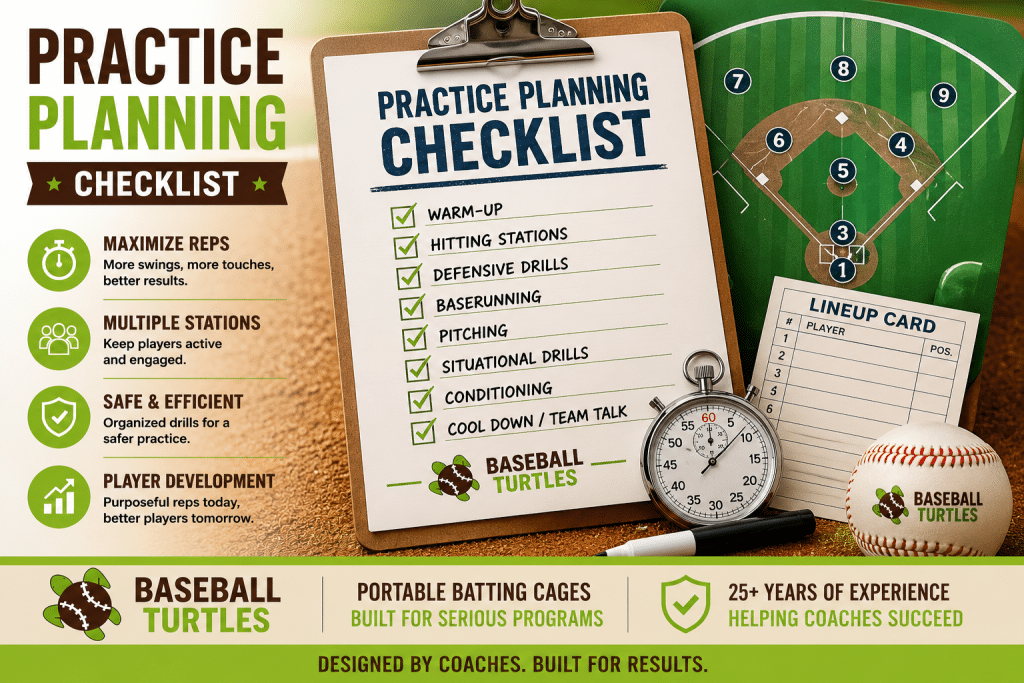
📋 Batting Practice Planning Checklist
Before your players arrive, make sure you’ve completed the following:
✔ Review today’s practice objectives
✔ Set up batting practice stations
✔ Position portable practice equipment
✔ Organize baseballs and training aids
✔ Assign players to practice groups
✔ Review station rotations with assistant coaches
✔ Confirm safety zones around batting areas
✔ Prepare backup plans for weather or field changes
✔ Have water and first aid supplies available
✔ End with a clear team objective and practice review
Sample 60-Minute Baseball Practice Plan
Not every baseball program has two or three hours to practice.
Many youth organizations, middle schools, and recreational leagues have just one hour to develop players. The key is having a structured plan that keeps everyone moving.
Below is a sample 60-minute practice that emphasizes efficiency and player development.
| Time | Activity |
|---|---|
| 0–10 Minutes | Dynamic warm-up and throwing progression |
| 10–20 Minutes | Defensive fundamentals |
| 20–40 Minutes | Multi-station batting practice |
| 40–50 Minutes | Base running and situational baseball |
| 50–60 Minutes | Team review and conditioning |
The goal isn’t to cover everything.
The goal is to make every minute count.
⚾ Coach’s Tip
If you’re limited to one hour, don’t try to teach every skill in one practice.
Choose one offensive objective and one defensive objective, then build every drill around those goals.
Focused practices produce faster improvement than trying to cover every aspect of the game.
Sample 90-Minute Baseball Batting Practice Plan
Many high school programs schedule practices between 90 and 120 minutes.
This allows coaches to spend more time reinforcing fundamentals while giving players additional repetitions.
| Time | Activity |
|---|---|
| 0–15 Minutes | Warm-up and throwing progression |
| 15–35 Minutes | Defensive drills |
| 35–65 Minutes | Multi-station batting practice |
| 65–80 Minutes | Team defense and situational baseball |
| 80–90 Minutes | Conditioning and practice review |
Notice that batting practice isn’t the entire practice.
It’s one important part of a balanced player development plan.
Sample 120-Minute Baseball Practice Plan
Longer practices provide opportunities to work on specialized situations without sacrificing repetitions.
| Time | Activity |
|---|---|
| 0–15 Minutes | Dynamic warm-up |
| 15–30 Minutes | Throwing progression |
| 30–55 Minutes | Defensive fundamentals |
| 55–90 Minutes | Multi-station batting practice |
| 90–105 Minutes | Base running and game situations |
| 105–115 Minutes | Bullpens or specialty instruction |
| 115–120 Minutes | Team review |
A longer practice should never feel longer.
Keeping players rotating through stations helps maintain energy and focus.
Equipment That Makes Practice More Efficient
Organization starts long before the first pitch.
The right equipment allows coaches to spend less time setting up and more time teaching.
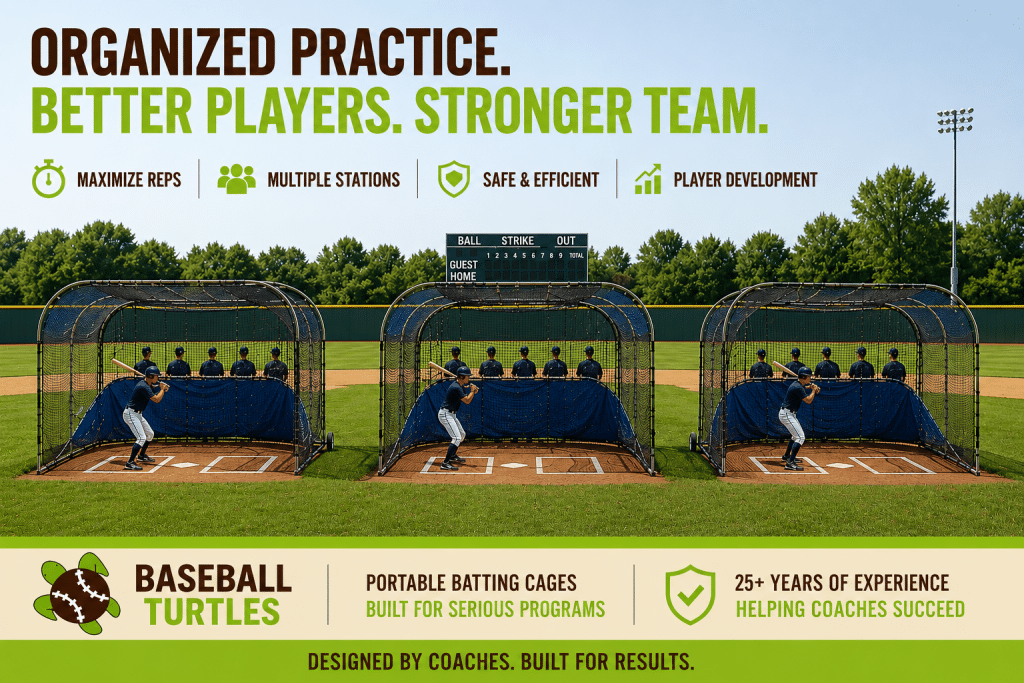
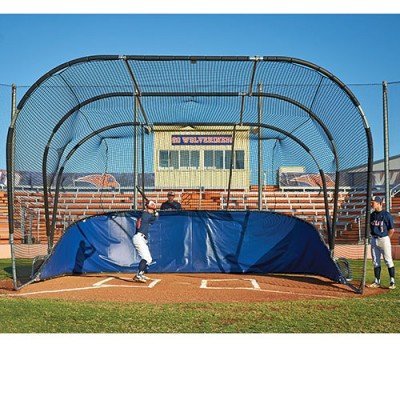
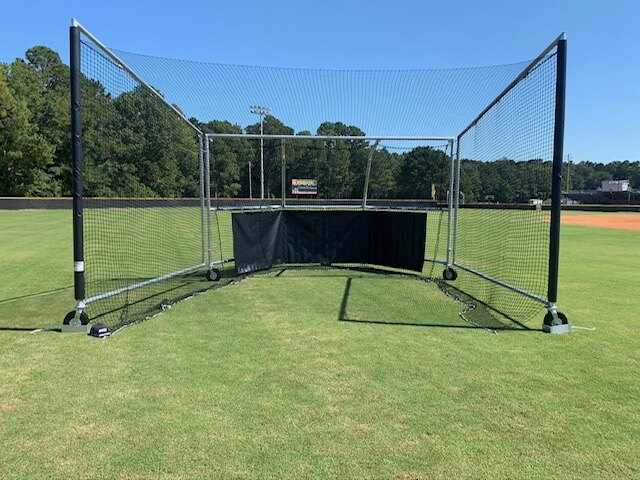
Portable Batting Cages
Portable batting cages make it possible to create multiple active hitting stations anywhere on the field.
Instead of forcing every hitter into one line, coaches can spread stations across the outfield or practice area, dramatically increasing player repetitions.
See Our Quality Portable Batting Cages
Batting Turtles
Batting turtles allow coaches to create dedicated batting stations that are safe, portable, and easy to reposition throughout practice.
They’re ideal for programs that want to maximize swings without adding unnecessary setup time.
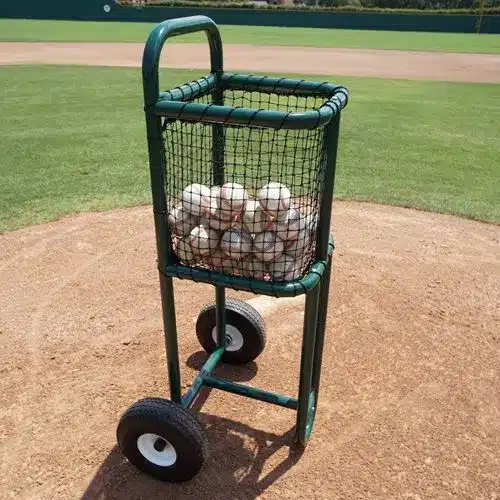
Ball Carts
Nothing slows practice more than chasing baseballs.
Organized ball carts help coaches keep drills moving while reducing unnecessary interruptions.
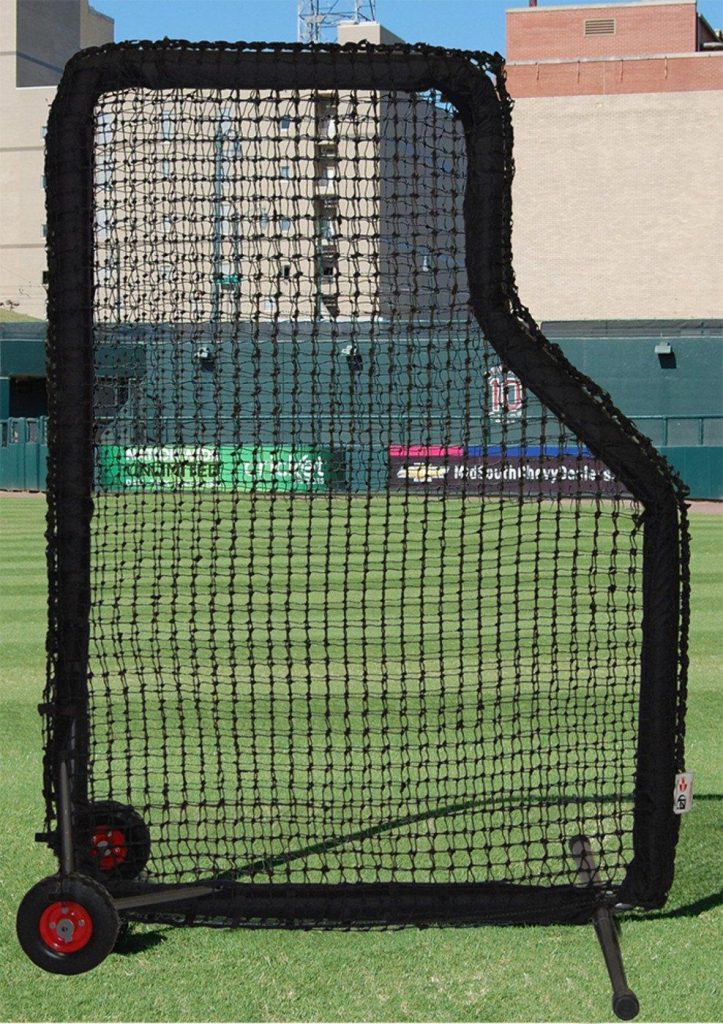
L-Screens and Protective Screens
Protective screens improve safety while allowing coaches to provide front toss and live batting practice more efficiently.
Well-positioned screens also create clearly defined practice areas.
Hitting Mats
Portable hitting mats provide consistent footing and clearly establish hitting areas during both indoor and outdoor practices.
They’re especially useful when creating multiple stations on grass fields.
Batting Practice Accessories
Small details often create the biggest improvements.
Equipment such as lineup boards, station markers, practice cones, stopwatches, and storage systems help coaches keep practices organized and players focused.
Our Batting practice accessories
-
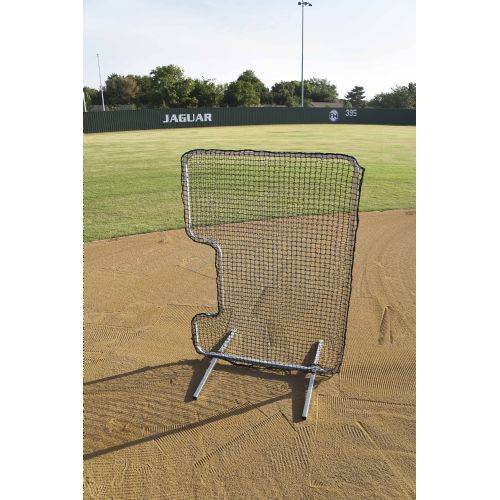
A Unique C Style Short Toss Screen | Softball Screen
Price range: $379.00 through $659.00 -
Baseball Hitting Mats | 6′ x 12′ Pro Turf Mats in Green or Clay
Original price was: $429.00.$390.00Current price is: $390.00. -
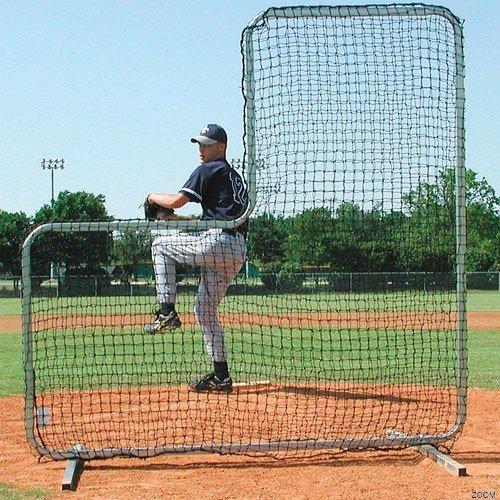
Baseball Pitching L Screen & Optional Wheels & Padding | 7′ H x 7′ W Team Model
Price range: $390.00 through $640.00 -
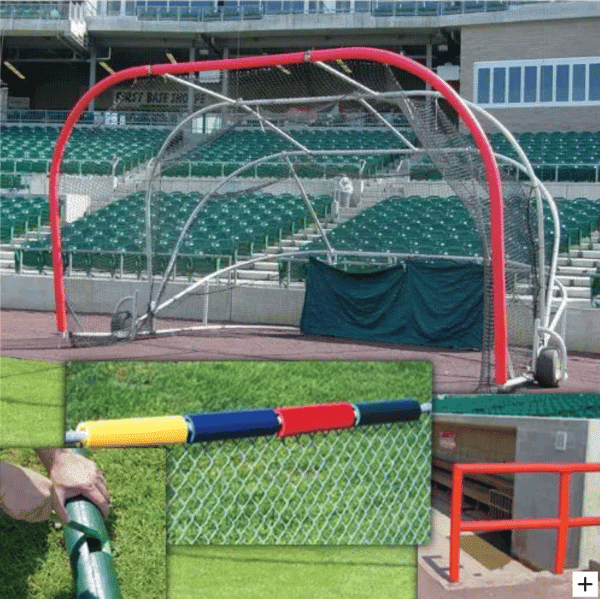
Baseball Turtle Padding & for Fences, Dugouts & Screens
$0.00 -
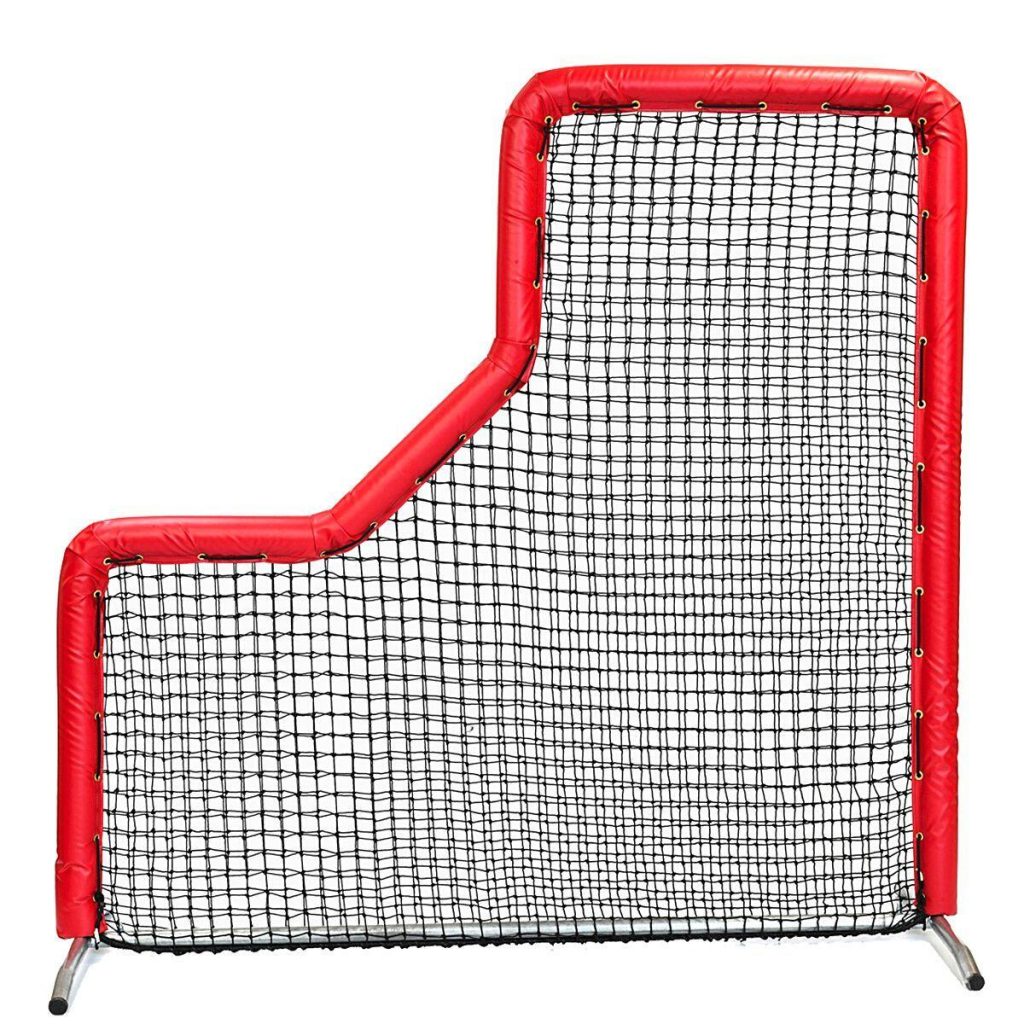
Bullet L Screen Baseball Pitching Screen 7’x7′
Price range: $540.00 through $690.00 -
Compact 5′ x 7′ Pro L Screen With Wheels & Padding | Heavy #60 Net
Original price was: $790.00.$720.00Current price is: $720.00. -
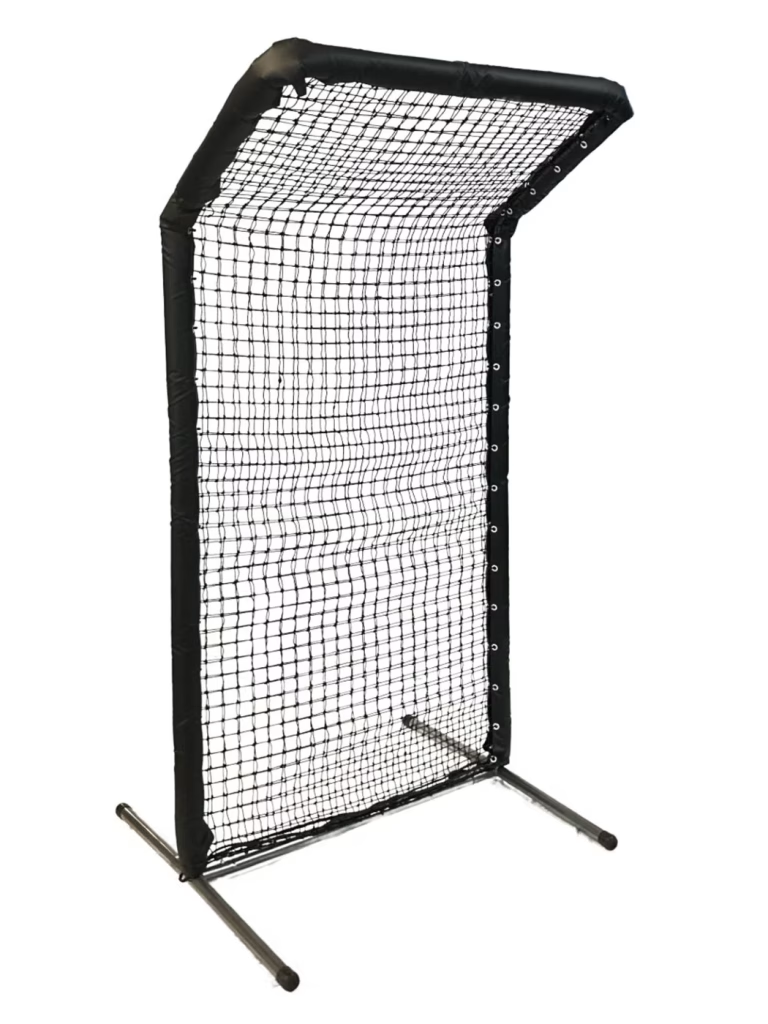
Compact Baseball Front Toss Screen | Short Toss Screen | Small Footprint For Field or Batting Cage
$390.00 -
Compact Pro Team Baseball Caddy & Softball Caddy | Now Ships Free!
Original price was: $429.99.$369.00Current price is: $369.00. -
High Grade Practice Baseballs! Now Ships Free!
Price range: $79.00 through $750.00
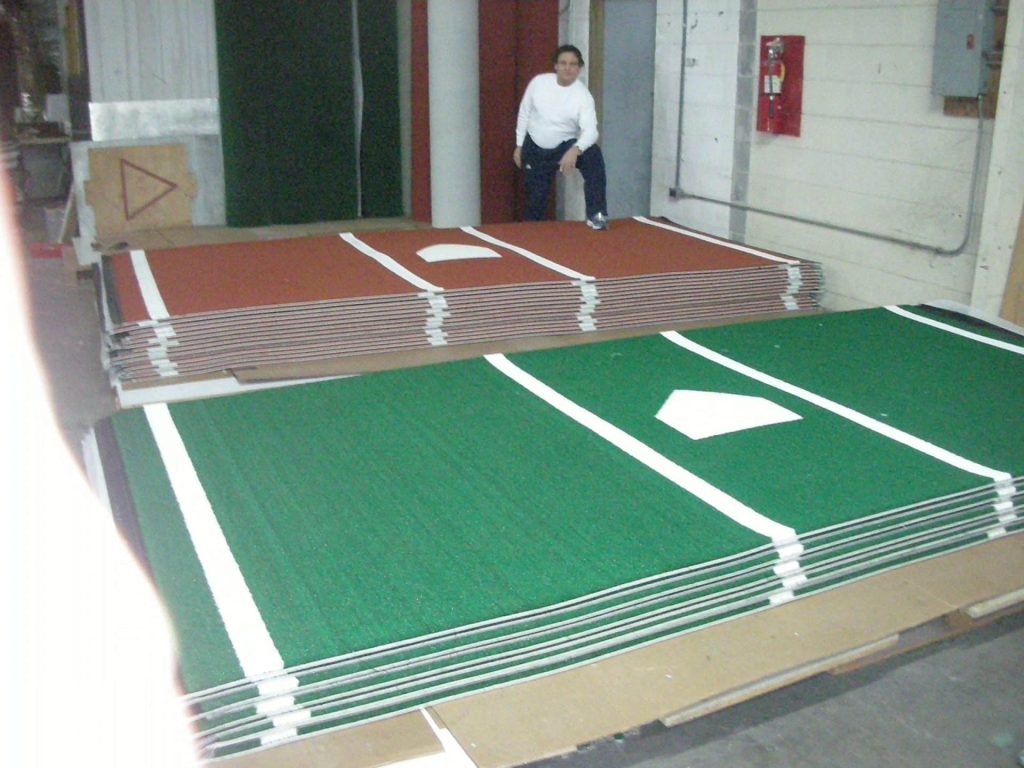

🥎 Equipment Tip
Think of your practice equipment as part of your coaching staff.
The right equipment should save time, improve organization, and increase player repetitions—not create more work during setup.
For Coaches Who Run Large Rosters
Planning Batting Practice for Large Teams
Managing a roster of 30 to 50 players requires more than good drills.
It requires a system.
Rather than having every player wait in one batting line, divide the team into smaller groups and rotate them through organized stations.
Example stations might include:
- Live batting practice
- Front toss
- Tee work
- Soft toss
- Infield drills
- Outfield fundamentals
- Pitch recognition
- Base running
With multiple stations operating at the same time, players remain active instead of standing around waiting for their turn.
This not only increases repetitions but also keeps players mentally engaged throughout practice.
Indoor Practice Strategies
Weather shouldn’t stop player development.
Indoor practices often present space limitations, making organization even more important.
Portable practice equipment allows coaches to build temporary training stations that can be adjusted to fit available space.
Indoor stations may include:
- Tee work
- Soft toss
- Pitch recognition
- Dry swing mechanics
- Defensive footwork
- Throwing progression
Portable batting cages and batting turtles also provide flexibility when working inside gymnasiums, indoor facilities, or covered practice areas.
🛡️ Safety Tip
Always position hitting stations so every batter swings in the same direction.
Clearly defined station boundaries reduce distractions, improve supervision, and help prevent players from entering active hitting areas.
Keeping players waiting behind active batting stations—not in front of them—creates a safer and more organized practice environment.
💡 Did You Know?
Many coaches discover they can nearly double the number of quality swings each player receives simply by replacing one traditional batting line with multiple organized hitting stations.
Better organization often leads to better player development without extending practice time.
For Athletic Directors and Baseball Program Leaders
A well-organized practice benefits more than just players and coaches.
Athletic directors and program administrators also benefit from equipment that supports long-term program success.
When evaluating baseball practice equipment, consider:
- Daily durability
- Ease of setup
- Storage requirements
- Portability between fields
- Multi-team use
- Replacement part availability
- Long-term value
- Purchase Order (PO) purchasing options
Investing in equipment that serves multiple teams over many seasons helps maximize both budgets and player development.
🏆 Program Builder
Strong baseball programs are built on consistent systems.
When practices are organized, coaches teach more effectively, players develop faster, and equipment investments deliver greater value season after season.
Build a Better Batting Practice Program
For more than 25 years, Baseball Turtles has helped high schools, colleges, universities, youth organizations, training facilities, and professional baseball programs create more organized, efficient batting practice systems.
Whether you’re outfitting a single field or upgrading an entire baseball program, we’ll help you choose the right portable batting cages, batting turtles, and practice equipment to fit your team, facility, and budget.
We understand that every program has different needs, available space, and purchasing requirements. That’s why we’re happy to answer questions, recommend equipment, and provide quotes tailored to your program.
Schools, colleges, universities, and municipal organizations are welcome. Purchase Orders (POs) are accepted.
⚾ Ready to Build a More Efficient Batting Practice?
Call 828-820-8644 to speak with one of our batting practice equipment specialists, or Request a Quote online. We’ll help you create a safer, more organized practice environment that maximizes player development and makes every practice more productive.
Key Takeaways
⚾ Every successful baseball practice begins with a written plan and clearly defined objectives.
⚾ Organizing practice into timed segments helps maximize player development and reduce downtime.
⚾ Multi-station batting practice increases player repetitions while keeping athletes engaged.
⚾ Smaller player groups allow coaches to provide more meaningful instruction.
⚾ Portable batting cages and batting turtles make it easier to build flexible practice layouts.
⚾ Practice organization improves safety by creating clearly defined hitting areas.
⚾ Planning ahead allows coaches to spend more time teaching and less time setting up equipment.
⚾ Efficient practices benefit players, coaches, athletic directors, and entire baseball programs.
⚾ Investing in organized practice systems helps programs get more value from every practice.
⚾ Consistent practice planning builds stronger teams throughout the season.
Frequently Asked Questions
How do you organize batting practice?
Start with one or two clear objectives, divide practice into timed segments, and use multiple stations to keep players active. Organized practices reduce downtime while increasing quality repetitions and instruction.
How long should a baseball practice be?
Most baseball practices last between 60 and 120 minutes depending on the team’s age, competition level, and available practice time. The key is using that time efficiently rather than simply practicing longer.
What should every baseball practice include?
Every practice should include a dynamic warm-up, throwing progression, defensive work, offensive development, batting practice, game situations, and a team review.
Why is practice planning important?
Practice planning keeps players engaged, reduces wasted time, improves coaching efficiency, and ensures every drill supports player development.
How can coaches maximize player repetitions?
Using multiple batting stations, organizing smaller player groups, and reducing time spent waiting in line allows every athlete to receive more quality repetitions.
What equipment helps organize baseball practice?
Portable batting cages, batting turtles, hitting mats, protective screens, ball carts, and practice accessories all help coaches build organized, efficient practice environments.
How do you organize batting practice for large teams?
Divide players into small groups and rotate them through multiple stations using timed intervals. This keeps everyone active while allowing coaches to provide focused instruction.
How do coaches plan indoor baseball practices?
Indoor practices should focus on stations such as tee work, soft toss, defensive footwork, throwing progression, and swing mechanics while making efficient use of available space.
What is the biggest mistake coaches make during practice?
Trying to cover too many skills in one practice. Focusing on one or two measurable objectives produces better long-term player development.
How do portable batting cages improve batting practice?
Portable batting cages allow coaches to build flexible practice layouts, increase batting repetitions, improve safety, and create organized hitting stations almost anywhere.
Our Best selling Portable Batting Cages
-
Big Bubba Batting Cage Parts & Bubba Elite Batting Cage Parts
Price range: $45.00 through $1,780.00 -

The #1 Pro Batting Turtle | The Pitch Hunter Pro Baseball Turtle
Price range: $8,700.00 through $9,900.00 -

The Pitch Hunter Express Baseball Turtle – The Batting Turtle Every School Wants
Price range: $8,200.00 through $9,500.00 -
The New Pro Turtle | Our 21st Century Batting Cage Turtle
Price range: $6,900.00 through $7,700.00 -
The Singles Hitter Portable Batting Cage Fits Your Small Gate
$6,900.00