
TL;DR: The best portable batting cage for a high school baseball program combines heavy-duty construction, easy mobility, and fast setup so coaches can run organized hitting stations every day. Portable systems outperform permanent cages for most programs because they adapt to changing practice needs, work indoors and outdoors, and deliver stronger long-term value for athletic directors managing tight budgets.
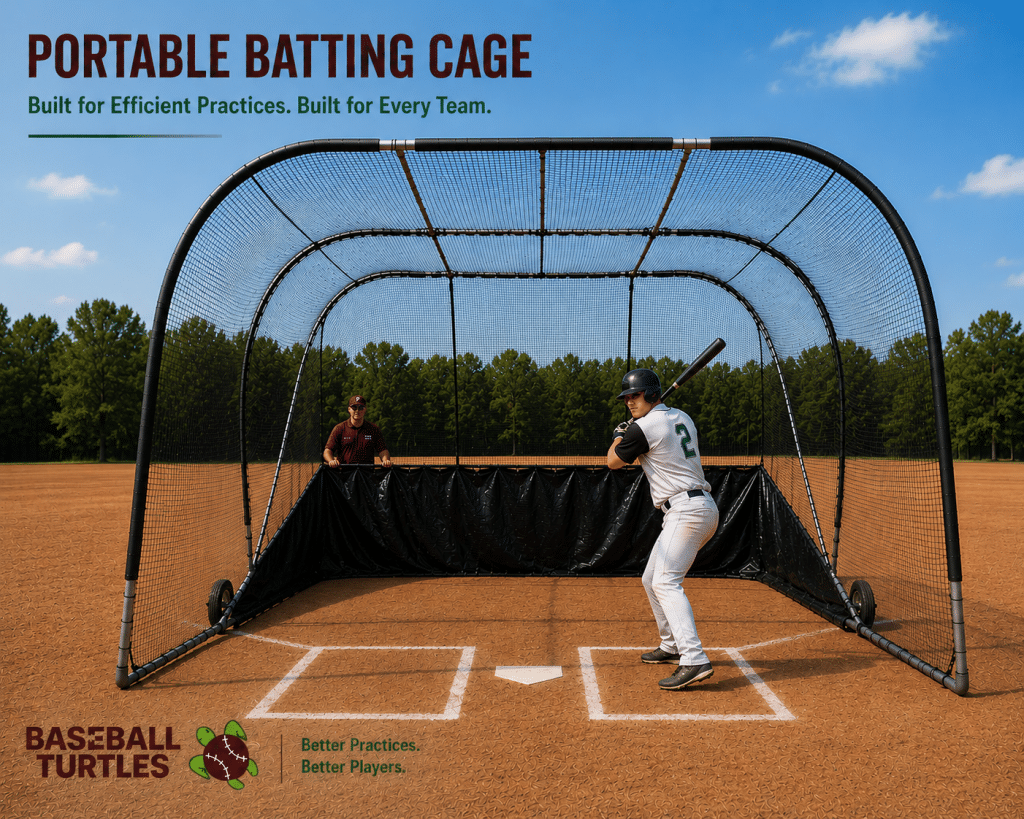
What is the best portable batting cage for a high school baseball program?
The best portable batting cage for a high school baseball program is one that combines durability, fast setup, easy mobility, and player safety so coaches can run organized hitting stations every single practice. High school programs face daily pressure from large rosters, shared facilities, and changing schedules, and the right portable cage solves all three problems at once.
Coaches need equipment that handles daily use and supports large rosters without breaking down mid-season. Athletic directors need equipment that delivers long-term value, keeps replacement costs low, and protects player safety.
A quality portable batting cage checks every one of those boxes. Unlike permanent installations that lock you into one layout, portable systems let coaches create organized hitting stations, adapt to whatever the day requires, and make the most of limited field space.
Whether your program is rebuilding, replacing aging equipment, or trying to get more out of each practice hour, choosing the right portable batting cage is one of the most important equipment decisions you will make.
Why do high school baseball programs choose portable batting cages?
High school baseball programs choose portable batting cages because they adapt quickly to changing practice schedules, weather conditions, and field availability without sacrificing organized, productive training time.
Practice schedules shift. Weather changes plans. Fields get shared with other sports. Portable systems let your program keep moving no matter what comes up.
Programs that invest in portable practice systems regularly find they can increase player reps while keeping practices safer and better organized. Here is what you gain:
- Faster setup and breakdown
- Better practice organization across multiple stations
- Smarter use of available field space
- Easier equipment storage when space is shared
- Indoor and outdoor flexibility
- More hitting reps per player per practice
- Reduced downtime between drills
What should coaches look for in a portable batting cage?
Coaches should look for a portable batting cage that is built for heavy daily use, moves with minimal effort, keeps players safe, and stores efficiently when the facility is shared with other sports.
Not every portable cage is designed for daily team use. Many hold up fine for occasional backyard sessions but break down fast under the demands of a full high school program. Here is what separates good equipment from great equipment.
Durability
Your cage needs to handle:
- Daily batting practice reps
- Multiple teams using the same equipment
- Frequent repositioning across the field
- Weather exposure across a full season
- Heavy use year after year
Focus on heavy-duty frame construction and netting systems built for long-term performance, not one-season use.
Mobility
Mobility is what separates a portable cage from a fixed one. Look for systems that:
- Roll smoothly across grass and turf
- Can be repositioned by one or two staff members
- Allow fast station changes without tools
- Support flexible practice layouts from day to day
Safety
Player safety is never optional. A quality portable batting cage creates defined hitting areas and supports organized player movement during practice. Key safety considerations include:
- Stable frame construction that does not tip or shift during use
- Proper net containment so balls stay where they should
- Clear sightlines for coaches monitoring multiple stations
- Predictable practice flow that reduces collision risk
Ease of Storage
Most schools share facilities with other sports. A batting cage that stores efficiently means your equipment is never a problem for the next team using the space, and your setup time stays short every day.
Portable batting cages vs. permanent batting cages: which is the better investment?
For most high school baseball programs, portable batting cages are the better investment because they provide greater flexibility, lower facility costs, and stronger long-term value than permanent installations.
| Feature | Portable Batting Cage | Permanent Batting Cage |
|---|---|---|
| Practice layout flexibility | High – change layouts daily | Low – fixed position only |
| Field space use | Supports on-field and off-field BP | Dedicated space required |
| Indoor and outdoor use | Yes, for many models | Typically one environment |
| Storage when not in use | Easy to move and store | Stays in place permanently |
| Facility investment required | Low to moderate | High, often requires permits |
| Multi-team use | Easy to share across teams | Limited by fixed location |
| Long-term value | Strong for most programs | Depends on facility budget |
Permanent cages can work well for programs with a dedicated training facility and a fixed budget for construction. But for the majority of high school programs managing shared spaces, tight budgets, and variable practice schedules, portable systems deliver more usable value every season.
What is the best portable hitting station for baseball practice?
The best portable hitting station for baseball practice is one built specifically for daily team use, moves easily between drill locations, and gives coaches the flexibility to run live BP, tee work, soft toss, and front toss all at once without wasting field time.
A portable hitting station is only as good as the number of quality reps it produces. The goal is always to keep hitters active and keep coaches coaching, not managing logistics.
Baseball Turtles offers several portable hitting station options matched to different program needs:
- Home Plate Portable Hitting Cage – designed for organized on-field hitting stations
- Big Bubba Elite Baseball Batting Cage – built for heavy daily team use
- Foldable Batting Cage Batting Turtle – works well indoors or outdoors with fast setup
- Doubles Hitter Portable Batting Turtle – supports two simultaneous hitting stations
- Sandlot Portable Baseball Backstop – a flexible backstop option for varied drill setups
- Roll-Away Batting Cage – rolls into position quickly for efficient practice transitions
- Pitch Hunter Baseball Batting Turtle – designed for pitcher-focused practice setups
Having the right portable hitting station means your players spend practice time hitting, not standing in line.
What is the best batting cage for a training facility?
The best batting cage for a training facility is one that can handle high-volume daily use across multiple athletes, stores efficiently when the space is needed for other activities, and gives facility managers the flexibility to reconfigure the training environment quickly.
Indoor training facilities face specific challenges that outdoor-only cages do not solve. Space is limited. Multiple sports often share the same footprint. Layouts need to change between sessions. A portable system built for serious training volume handles all of that without requiring a permanent footprint or a construction crew.
For facilities running serious batting practice programs, the key factors are:
- Heavy-duty construction that holds up to high session volume
- Quality netting that reduces replacement cost over time
- Smooth wheel systems that let one person reposition the cage between sessions
- Setup options that let you configure the space differently for different drills
- Low maintenance requirements that keep operating costs down
The Foldable Batting Cage Batting Turtle is a strong option for indoor training facilities that need both quick setup and flexible storage. The Big Bubba Elite suits facilities running high daily rep counts across multiple athletes.
How do portable batting cages improve practice efficiency?
Portable batting cages improve practice efficiency by making it fast and easy to create multiple hitting stations simultaneously, which reduces player wait time, increases total reps per practice, and lets coaches focus on coaching instead of managing logistics.
More Player Reps Per Practice
Portable systems make it straightforward to set up:
- Live batting practice stations
- Tee stations
- Soft toss stations
- Front toss stations
When players rotate through organized stations, nobody is standing around waiting. Every player is working at every moment of practice.
Faster Practice Transitions
Portable equipment lets coaches adjust practice layouts in minutes without eating into field time. You can shift from live BP to station work and back again without a long reset.
Better Use of Every Coach on Staff
Organized station layouts let each coach focus on a smaller group of players. That means more focused instruction, better feedback, and faster player development across your entire roster.
Read more: How to Run More Efficient Batting Practice
What features matter most for daily team use?
For daily team use, the features that matter most are heavy-duty frame construction, quality netting, smooth wheel systems, flexible setup options, and low maintenance requirements, because those four factors directly determine how long your investment lasts and how much time you spend managing equipment instead of coaching.
Heavy-Duty Construction
Prioritize cages built to hold up over multiple full seasons of daily use, not just weekend sessions. Frames that flex or degrade quickly cost programs more in the long run through repeated replacement purchases.
Quality Netting
Strong netting improves durability and cuts replacement costs season after season. It also provides better ball containment, which matters for player safety on a busy practice field.
Smooth Wheel Systems
When your program manages multiple teams and multiple fields, repositioning a batting cage needs to be a one-person job that takes two minutes, not a crew effort that takes twenty.
Flexible Setup Options
The ability to create different practice layouts on different days helps coaches adapt to roster size, available space, and the specific skills being developed that week.
Low Maintenance Requirements
Athletic directors running programs across a full school year appreciate equipment that does not demand constant attention. Lower maintenance requirements mean more budget stays available for player development.
Can portable batting cages work for indoor training facilities?
Yes, many portable batting cages work well in indoor training facilities because they can be repositioned quickly, stored when the space is needed for other activities, and configured differently from session to session without any permanent installation.
Indoor facilities deal with two challenges that outdoor setups do not: limited square footage and shared training areas. Portable systems solve both.
Limited Space
Portable systems help you maximize every square foot of available training area. When a cage can be rolled into position and rolled back out again, you effectively have more usable space than a permanent installation would allow.
Shared Training Areas
Portable cages allow facilities to quickly reconfigure training environments between sessions and sports. A space used for batting practice in the morning can be cleared for a different program in the afternoon without any tools or heavy labor.
The Foldable Batting Cage Batting Turtle is specifically designed to work well in both indoor and outdoor environments, making it a strong choice for programs that train in multiple locations throughout the year.
Quick Recap
- Portable batting cages help high school programs run organized, efficient practices that produce more player reps.
- The best portable cages for team use combine heavy-duty construction, smooth mobility, quality netting, and fast setup.
- Portable systems outperform permanent cages for most high school programs because of their flexibility and lower facility investment.
- Multiple hitting stations running simultaneously reduce player wait time and keep every athlete working throughout practice.
- Indoor and outdoor flexibility makes portable systems the smarter choice for programs that share facilities.
- Athletic directors gain long-term ROI through reduced replacement costs and lower maintenance demands.
- Organized station layouts let coaches deliver focused instruction to smaller groups, which speeds up player development.
- Read How to Run More Efficient Batting Practice to put these principles into action right away.
Frequently Asked Questions
How long do portable batting cages last with daily high school use?
A portable batting cage built for team use with heavy-duty frame construction and quality netting can last multiple seasons with daily use. Longevity depends on how well the cage is designed for high-volume conditions rather than occasional backyard use. Programs that choose equipment rated for daily team practice consistently get stronger multi-season performance.
Can one coach set up a portable batting cage alone?
Most portable batting cages designed for team use are built so that one or two staff members can set them up and reposition them without additional help. Systems with smooth wheel mechanisms make single-person repositioning practical even on grass or turf.
Are portable batting cages safe for high school players?
Yes, when properly selected and used. Quality portable batting cages create defined hitting areas, contain balls within the netting, and support organized player movement during practice. Stable frame construction and proper net containment are the two most important safety features to verify before purchasing.
What size portable batting cage does a high school program need?
Size requirements depend on your practice layout, roster size, and available field space. Programs running multiple simultaneous hitting stations benefit from systems that support station-based setups rather than a single large cage. Contact Baseball Turtles at 828-820-8644 to talk through what your specific program needs.
Do portable batting cages work on natural grass fields?
Yes. Portable batting cage systems with smooth wheel mechanisms are designed to move across both natural grass and artificial turf. The ability to reposition across different field surfaces is one of the core advantages of a portable system over a permanent installation.
How do portable batting cages help with practice organization?
Portable batting cages let coaches create multiple hitting stations at once, which keeps every player active throughout practice instead of waiting in a single line. Faster transitions between drills, organized station rotations, and flexible layouts all add up to more reps and better instruction per practice hour.
Is a portable batting cage or a permanent batting cage better for a high school program?
For most high school programs, a portable batting cage delivers stronger long-term value because it adapts to shared facilities, changing practice schedules, and variable roster sizes. Permanent cages require significant facility investment and lock programs into a fixed layout. Portable systems give coaches the flexibility that daily team management actually requires.
Ready to Upgrade Your Program’s Batting Practice Setup?
Choosing the right portable batting cage is a decision that affects every practice for the next several seasons. If you want to talk through which system fits your program’s roster size, facility setup, and practice goals, give us a call at 828-820-8644. The team at Baseball Turtles works with high school coaches, athletic directors, and program administrators nationwide and can help you find the right solution for daily team use.