
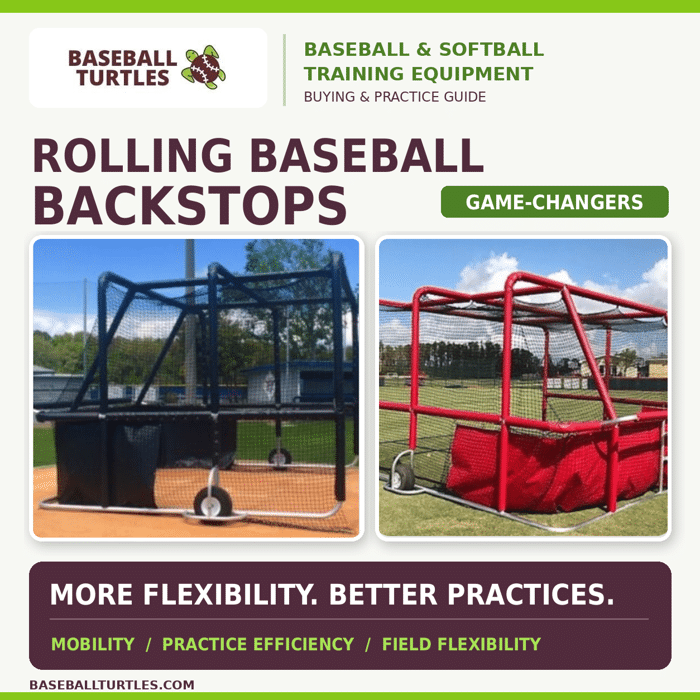
Rolling baseball backstops have become game-changers for baseball and softball programs that want to make better use of their practice time, athletic facilities, and equipment budgets. Instead of being limited to a permanent training location, coaches can bring the backstop to the practice area, adjust their setup, and move equipment when the session is finished.
For athletic directors, coaches, and equipment managers, that flexibility can make a substantial difference in daily operations. From youth leagues and high school programs to colleges, universities, and professional baseball organizations, rolling backstops help teams make better use of their practice time, training facilities, and equipment investments.
What Is a Rolling Baseball Backstop?
A rolling baseball backstop is a portable, wheeled structure designed to help contain baseballs or softballs during batting practice, pitching sessions, and other training activities. Unlike a permanent backstop, a rolling model can be repositioned to accommodate different practice arrangements.
Some rolling backstops are open protective barriers, while others are enclosed batting-practice cages commonly called baseball turtles.
The primary advantage is flexibility: coaches can organize their equipment around the day’s training objectives rather than designing every practice around a fixed installation.
The Bottom Line
- Rolling backstops allow coaches to change practice locations and configurations.
- Portable equipment can help programs share fields more effectively.
- Good netting, durable construction, and practical mobility contribute to long-term value.
- Different backstop designs serve different training needs.
- Choosing the right model can improve practice organization while making better use of an equipment budget.
Table of Contents
Why Rolling Backstops Are Game-Changers
The biggest advantage of rolling backstops isn’t simply that they have wheels. It’s what those wheels allow a baseball program to accomplish.
Make Better Use of Practice Time
Every coach knows how quickly a practice session can disappear. Between organizing drills, retrieving baseballs, moving equipment, and rotating players, valuable minutes are easily lost.
A properly selected rolling backstop can reduce unnecessary ball retrieval and keep hitting or throwing activities better organized.
That means coaches can spend more time working with players instead of constantly interrupting practice to rearrange equipment.
When a program operates on a tight practice schedule, even modest improvements in organization can make a meaningful difference.
Get More From Your Existing Facilities
A permanent backstop occupies the same location whether the facility needs it that day or not.
Rolling backstops allow athletic programs to adapt their training arrangements to different activities. Equipment can be positioned for batting practice, moved to accommodate another drill, or relocated when the field is needed for games or maintenance.
This flexibility is particularly valuable for schools and recreation departments where several teams share the same athletic facilities.
Instead of allowing the facility layout to dictate every practice, coaches gain more control over how available space is used.
Support Multiple Training Stations
A single practice may involve hitting, pitching, fielding, and individual instruction. With portable equipment, coaches can organize separate stations around the activities they want players to perform.
For example, one station might accommodate batting practice while another supports controlled throwing drills.
The objective isn’t to crowd the field with equipment. It’s to create a logical arrangement that keeps players engaged while providing appropriate separation between activities.
A thoughtful setup reduces unnecessary transitions and makes it easier for coaches to supervise their assigned groups.
Adapt to Changing Program Needs
Baseball programs don’t remain static. Rosters change, coaching approaches evolve, and facilities are often shared with additional teams or activities.
Portable equipment can accommodate many of those changes without requiring permanent modifications to the field.
That flexibility makes rolling backstops attractive to programs seeking equipment that can continue serving them as their training needs evolve.
Choosing the Right Rolling Backstop for Your Program
Not every portable backstop is designed for the same job. Selecting the right equipment begins with understanding what your program actually needs.
Start With the Training Activity
Will the backstop primarily support batting practice, pitching instruction, or general ball containment?
An open portable backstop may be suitable for one application, while a fully enclosed batting turtle may be a better choice for another.
Some programs need a simple, movable barrier. Others need a larger batting-practice enclosure that can be used regularly throughout the season.
Knowing the intended activity helps narrow the options before comparing individual models.
Consider Your Available Space
Your equipment should fit the facility—not the other way around.
Think about the field area available for practice, the route between storage and the field, and any gates or access points the equipment must pass through.
Some programs require compact or folding equipment, while others have sufficient space for larger rolling systems.
For a more detailed discussion of these considerations, see our portable batting cage frame size guide.
Don’t Overlook Mobility
A rolling backstop must be practical to move, not merely capable of moving.
Consider the surfaces your equipment will travel over, how frequently it needs to be relocated, and who will be responsible for moving it.
Wheel design, frame configuration, and transport systems vary by model. The ideal choice balances the training benefits of the equipment with the practical realities of your facility.
The product specifications and assembly instructions should provide the details needed to evaluate individual models.
Rolling Backstops and Batting Turtles: Understanding Your Options
Baseball Turtles offers different types of portable equipment because schools, leagues, colleges, and training facilities don’t all have identical requirements.
Open Rolling Backstops
An open rolling backstop provides a portable protective barrier without enclosing the entire hitting area.
Our Sandlot Rolling Portable Baseball Backstop is one example. Its galvanized steel frame, netting, wheeled design, and protective wings provide an option for programs seeking a movable backstop rather than a complete batting cage.
This type of equipment can be particularly appealing to schools, parks, and recreation departments that need a practical solution for designated practice areas.
Enclosed Rolling Batting Turtles
For programs requiring a larger batting-practice enclosure, a portable baseball turtle provides another option.
The New Pro Turtle is an example of a folding batting cage with an aluminum frame, protective netting, padding, and a wheeled transport system.
An enclosed system can be appropriate for programs that conduct regular hitting sessions and want the benefits of a portable batting cage.
The choice between an open backstop and an enclosed turtle should reflect how the equipment will actually be used.
Quality Construction Makes a Difference
Rolling backstops are working pieces of athletic equipment. They’re moved, positioned, used, and stored throughout the baseball season.
That makes construction quality an important part of the purchasing decision.
Baseball Turtles emphasizes American-made equipment and American steel construction in its steel-framed models. Other models use aluminum frames, allowing programs to choose among different designs and operating characteristics.
The important considerations go beyond the frame material alone. Netting quality, protective components, wheel assemblies, and connection points all contribute to the equipment’s usefulness.
Good construction should be evaluated alongside the availability of compatible replacement components and the practical demands of everyday use.
A bargain isn’t much of a bargain if the equipment becomes difficult to operate or requires constant attention.
Getting More From Every Practice
The real value of portable backstops becomes apparent when they’re incorporated into a well-organized training program.
Create Stations With a Purpose
Each practice station should serve a specific training objective.
Coaches might organize separate areas for batting practice, tee work, or supervised throwing drills. The equipment arrangement should support those activities while maintaining suitable operating space.
A clearly defined practice layout helps players understand where they’re supposed to be and what they’re working on.
Keep Practice Moving
Efficient practice doesn’t necessarily mean rushing players through drills.
It means reducing unnecessary interruptions.
When equipment is appropriately positioned and players can transition logically between activities, coaches can focus more attention on instruction.
This becomes especially important for programs managing large rosters or limited practice periods.
Build Flexibility Into Your Facility
One of the strongest arguments for rolling backstops is that they allow a training facility to support different activities at different times.
A practice area used for hitting today might be needed for defensive instruction tomorrow.
Portable equipment gives coaches the option to change that arrangement without committing the space to a single permanent setup.
For more guidance on developing an effective practice layout, visit our training station design and backstop placement guide.
Can a Rolling Backstop Pay for Itself?
Absolutely. A quality rolling backstop can pay for itself within a few seasons while continuing to deliver value for years afterward.
Think about what your baseball program gains from a single investment. One rolling backstop can serve multiple teams, support different training stations, and accommodate changing practice schedules. Rather than dedicating valuable field space to one permanent setup, coaches have the freedom to bring the equipment where it’s needed.
That flexibility translates directly into more productive practices. Less time retrieving balls, rearranging equipment, and moving between distant practice areas means more time for hitting, pitching, instruction, and player development.
For athletic departments managing multiple teams, the benefits multiply. The same equipment can support varsity, junior varsity, baseball, and softball programs instead of sitting in one location waiting for its next scheduled use.
And because rolling backstops can be repositioned and stored when necessary, programs get more utility from their existing facilities without committing additional field space to permanent training installations.
That’s the real value of a quality rolling backstop: one equipment investment that works harder, serves more athletes, and makes every practice more productive.
When equipment delivers that kind of versatility season after season, it isn’t simply another expense on the athletic department’s budget. It’s an investment in the entire program.
Maintenance and Long-Term Value
Quality equipment still deserves proper care.
Regular inspection of netting, frames, connections, and mobility components helps identify problems before they interrupt practice.
Coaches and equipment managers should follow the manufacturer’s procedures for cleaning, moving, storing, and maintaining their particular model.
Our Baseball Turtle and Portable Backstop Maintenance Guide covers the important maintenance considerations in greater detail.
For setup and model-specific instructions, Baseball Turtles also provides assembly instruction manuals.
Maintaining the equipment you already own is part of making the most of your athletic department’s investment.
Frequently Asked Questions
What makes rolling baseball backstops better than fixed backstops?
Their primary advantage is flexibility. Rolling backstops can be repositioned for different training activities and moved when the space is needed for another purpose. Permanent backstops may still be appropriate for facilities with dedicated practice areas.
Are rolling backstops suitable for both baseball and softball?
Many portable backstop models are designed for baseball and softball applications. Buyers should confirm that the particular model supports their intended activities and operating conditions.
Can one person move a rolling baseball backstop?
That depends on the model, its transport system, and the conditions of the facility. Check the manufacturer’s moving instructions and personnel requirements before selecting equipment.
How do I determine the right backstop size?
Start with the activity you want to support and the space available at your facility. Consider the practice area, access routes, and storage requirements. Model-specific dimensions should guide the final decision.
What is the difference between a rolling backstop and a baseball turtle?
A rolling backstop generally refers to a movable protective structure used for ball containment. A baseball turtle typically refers to a portable, enclosed batting-practice cage. Both can be useful depending on the training activity.
Are rolling backstops worth the investment for smaller programs?
They can be. Youth leagues and smaller programs often share facilities and operate with limited equipment budgets. A portable backstop that fits their activities and available space can be a practical investment without requiring a permanent training installation.
Find the Right Rolling Backstop for Your Program
The right rolling backstop can change how your baseball or softball program uses its practice time, equipment, and athletic facilities.
Whether you need a portable backstop for a shared field or a full-size batting turtle for regular hitting sessions, Baseball Turtles offers American-made equipment designed for the demands of organized baseball and softball.
Explore our portable batting cages and rolling baseball turtles to compare available models.
Not sure which option makes the most sense for your program? Give us a call. Tell us about your facility, training requirements, and budget, and we’ll help you narrow the choices.
Call Baseball Turtles: 828-820-8644
Monday–Friday, 10 AM–5 PM Eastern Time
Better equipment. More productive practices. Greater value for your baseball program.