
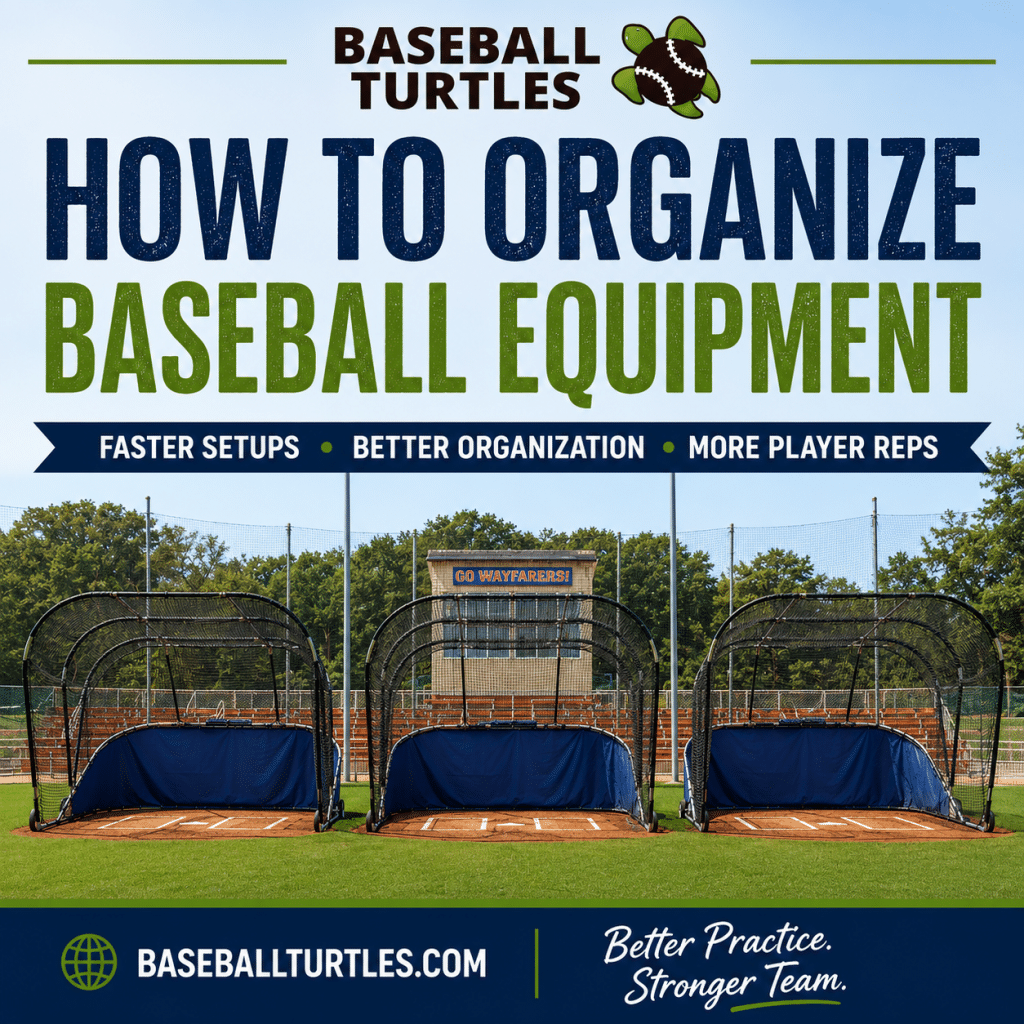
How do you organize baseball equipment for faster practices?
The most efficient baseball programs organize equipment before players arrive, assign dedicated practice stations, and keep all essential gear ready for use. A consistent equipment setup reduces downtime, improves safety, increases player repetitions, and allows coaches to spend more time teaching instead of managing equipment.
TL;DR
An organized equipment system is one of the easiest ways to improve baseball practices. When coaches know where every piece of equipment belongs and players understand station rotations, practices run smoother, players stay engaged, and valuable practice time isn’t wasted. This guide explains how coaches can organize baseball equipment, streamline practice setup, and create a more efficient baseball program.
Table of Contents
Baseball practices often become inefficient for one simple reason.
The equipment isn’t organized.
Players wait while baseballs are collected.
Batting cages are still being moved after practice begins.
Coaches search for hitting mats, L-screens, or buckets of baseballs.
Five minutes here.
Three minutes there.
By the end of practice, those small delays can add up to twenty or thirty minutes of lost player development.
Successful baseball programs understand something many coaches overlook:
Baseball equipment organization begins long before the first baseball is thrown.
When equipment is staged properly before players arrive, practice flows naturally. Players move confidently between stations, coaches spend their time teaching instead of searching for gear, and every athlete receives more quality repetitions.
Whether you’re coaching a youth team, a high school program, a college roster, or a professional organization, creating an organized equipment system is one of the easiest ways to improve every practice throughout the season.
Why Organizing Baseball Equipment Matters
Practice time is one of the most valuable resources a coach has.
Every minute spent looking for equipment is a minute players aren’t improving.
An organized practice setup creates immediate benefits:
- Faster practice setup
- More player repetitions
- Better communication
- Improved safety
- Less standing around
- More efficient station rotations
- Better use of assistant coaches
- Less stress before practice
Instead of constantly reacting to problems, coaches can focus on instruction and player development.
Equipment organization also creates consistency.
When players know where each station is located, where baseballs are stored, and how practice flows, transitions become automatic.
That consistency builds confidence throughout the program.
Common Equipment Organization Problems
Even experienced coaches encounter equipment challenges.
Recognizing these common problems is the first step toward solving them.
Equipment Is Scattered Across the Field
Nothing slows practice more than sending players in multiple directions to collect equipment.
Portable batting cages, hitting mats, baseball buckets, and protective screens should all have designated locations before practice begins.
A consistent setup saves valuable time every day.
Players Spend Too Much Time Waiting
One batting station.
Twenty players.
Long lines.
The result is fewer swings, less instruction, and reduced player engagement.
Organized practices keep multiple stations operating simultaneously so athletes stay active throughout practice.
Coaches Spend More Time Setting Up Than Teaching
Many coaches arrive early only to spend much of that time unloading equipment and deciding where everything belongs.
Creating a repeatable equipment layout eliminates guesswork and allows coaches to begin instruction sooner.
Baseballs Are Constantly Being Collected
Every interruption to gather baseballs slows practice.
Using organized ball carts, designated collection areas, and efficient station layouts helps practices continue with fewer interruptions.
Players stay engaged while coaches maintain momentum.
Equipment Doesn’t Have a Permanent Home
When every piece of equipment is stored in a different location, setup becomes unpredictable.
Creating designated storage areas for batting cages, batting turtles, hitting mats, protective screens, and training accessories makes setup faster and cleanup easier.
The best organized baseball programs make it obvious where every piece of equipment belongs.
Too Many Players Move Between Stations at Once
Without clearly assigned groups, players often crowd one station while another sits empty.
Assigning players to specific groups before practice begins creates smoother transitions and keeps every station productive.
Organization isn’t just about equipment.
It’s about managing player movement as efficiently as possible.
⚾ Coach’s Tip
Great practices begin before the first baseball is thrown.
Spend ten minutes organizing your equipment before players arrive and you’ll save far more time throughout practice. When every batting station is ready before warm-ups begin, coaches can focus on developing players instead of moving equipment.
📋 Equipment Organization Checklist
Before every practice, confirm that your equipment is ready:
✔ Portable batting cages positioned
✔ Batting turtles placed at assigned stations
✔ Baseball buckets filled
✔ Ball carts stocked and accessible
✔ Hitting mats positioned correctly
✔ Protective screens in place
✔ Practice cones and station markers set
✔ Assistant coach responsibilities assigned
✔ Player groups organized before practice begins
✔ Safety zones clearly established
💡 Did You Know?
Many coaches focus on adding more drills to improve practice.
In reality, better organization often produces greater results than adding more activities. Reducing setup time, improving station flow, and increasing player repetitions can have a greater impact on development than extending practice by another 30 minutes.
Building an Organized Practice Setup
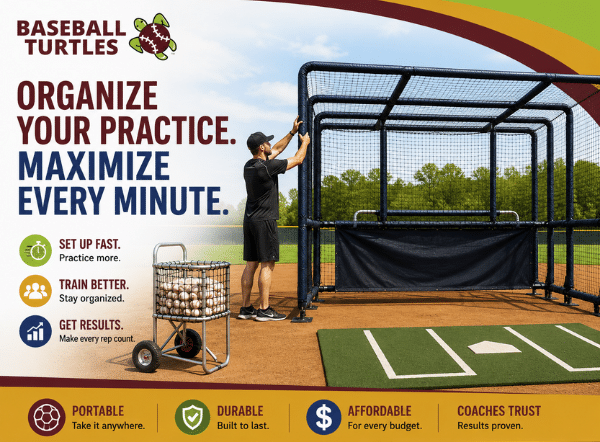
Every successful baseball practice begins long before the first player steps onto the field.
The most organized coaches don’t spend the first ten minutes deciding where equipment belongs. They arrive with a plan, position equipment before practice begins, and create a consistent layout that players recognize every day.
An organized practice setup reduces confusion, improves safety, and allows coaches to spend more time teaching instead of moving equipment.
The goal is simple:
Set it once. Teach all practice.
Organize Equipment Before Players Arrive
Practice should begin with players warming up—not waiting for coaches to unload equipment.
Before players arrive:
- Position batting turtles
- Set portable batting cages
- Place hitting mats
- Fill baseball buckets
- Stock ball carts
- Position L-screens
- Mark station boundaries
- Review today’s practice objectives
Starting prepared immediately sets the tone for an organized practice.
⚾ Coach’s Tip
If you’re still setting up equipment after players arrive, your practice has already started behind schedule.
Ten minutes of preparation before practice can save twenty minutes of lost instruction during practice.
Create Dedicated Practice Zones
Instead of moving equipment throughout practice, assign each activity its own permanent location.
Example:
🥎 Live Batting Practice
⚾ Front Toss
🥎 Tee Work
⚾ Soft Toss
🥎 Defensive Fundamentals
⚾ Base Running
When stations remain consistent, players quickly learn the routine and transitions become automatic.
Assign Equipment Responsibilities
The best programs don’t rely on one coach to do everything.
Assign responsibilities before practice begins.
Examples:
Head Coach
- Practice objectives
- Player rotations
Assistant Coach
- Batting stations
Assistant Coach
- Defensive stations
Team Managers
- Baseball buckets
- Ball carts
- Hitting mats
Players
- Return equipment to assigned locations
Organization becomes part of the culture.
Use Consistent Station Layouts
One of the simplest ways to improve practice efficiency is to stop changing the layout every day.
Players develop confidence when they know:
- where to report
- where equipment belongs
- when rotations occur
- where coaches are located
Consistency reduces confusion.
📋 Equipment Organization Checklist
Before every practice ask:
✔ Batting turtles positioned?
✔ Portable batting cages ready?
✔ Baseball buckets full?
✔ Ball carts stocked?
✔ Hitting mats placed?
✔ Protective screens positioned?
✔ Practice cones out?
✔ Coaches assigned?
✔ Player groups organized?
✔ Safety zones established?
Equipment That Saves Time Every Practice
The right equipment doesn’t simply improve practice.
It improves organization.
When coaches spend less time setting up, they spend more time coaching.
Portable Batting Turtles
Portable batting turtles allow coaches to build multiple organized batting stations that remain consistent throughout practice.
Benefits include:
- Fast setup
- Easy relocation
- Better organization
- Increased safety
- Daily team use
Suggested Internal Link: Batting Turtles
Portable Batting Cages
Portable batting cages provide flexibility for both outdoor and indoor practice environments.
Using multiple portable cages allows coaches to create several active stations instead of relying on one long batting line.
Ball Carts
Every unnecessary trip to retrieve baseballs slows practice.
Organized ball carts help maintain practice flow while reducing interruptions.
Hitting Mats
Portable hitting mats quickly define batting areas while providing consistent footing throughout practice.
They’re especially useful when building multiple hitting stations across the field.
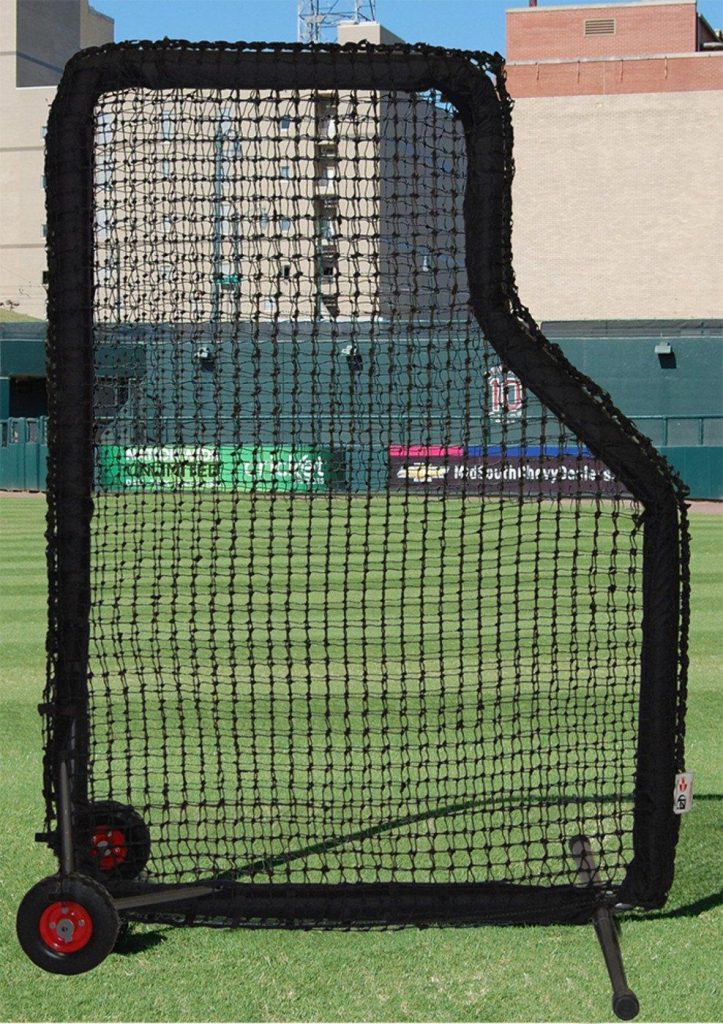
L-Screens
Protective screens improve both safety and organization.
Clearly defined coaching areas help players understand where drills begin and end.
Recommended L Screens
-
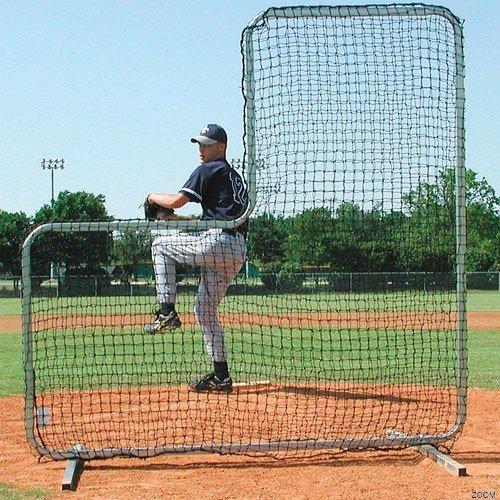
Baseball Pitching L Screen & Optional Wheels & Padding | 7′ H x 7′ W Team Model
Price range: $390.00 through $640.00 -
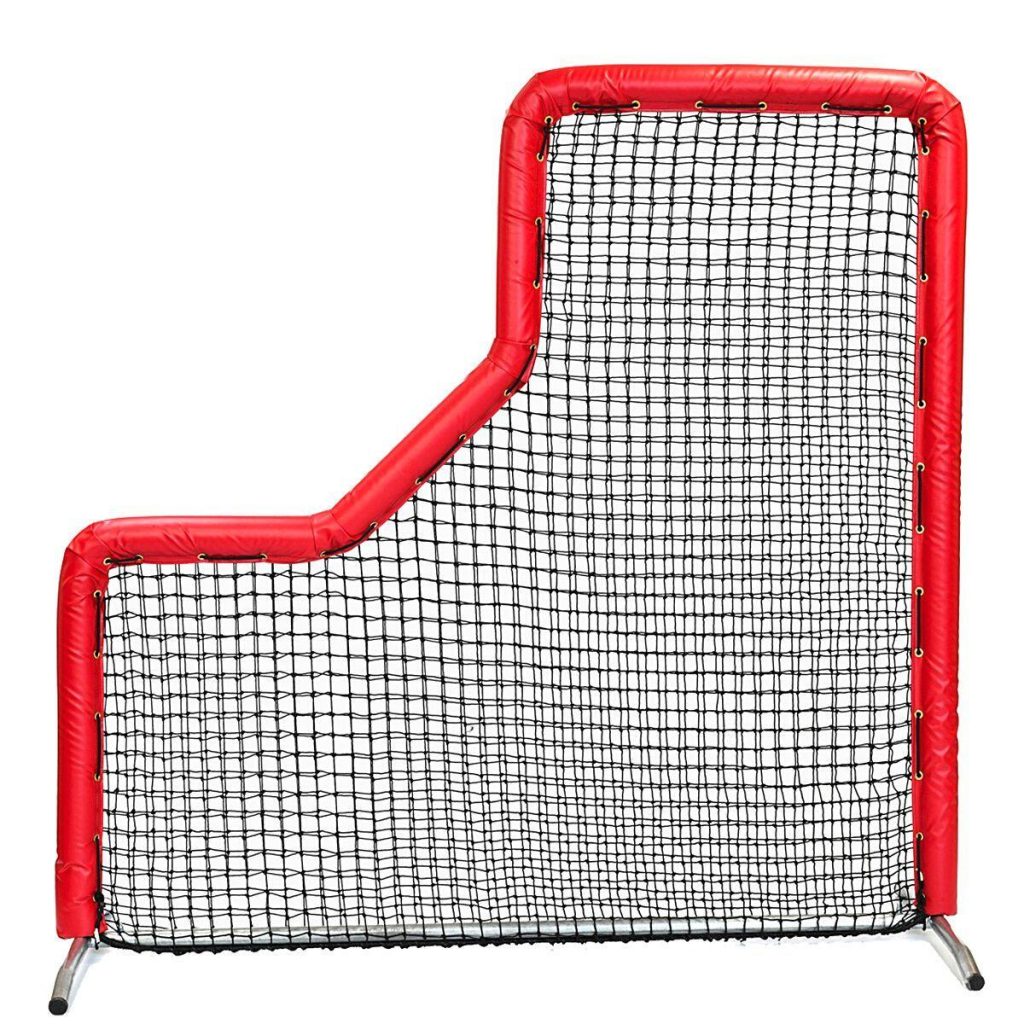
Bullet L Screen Baseball Pitching Screen 7’x7′
Price range: $540.00 through $690.00 -
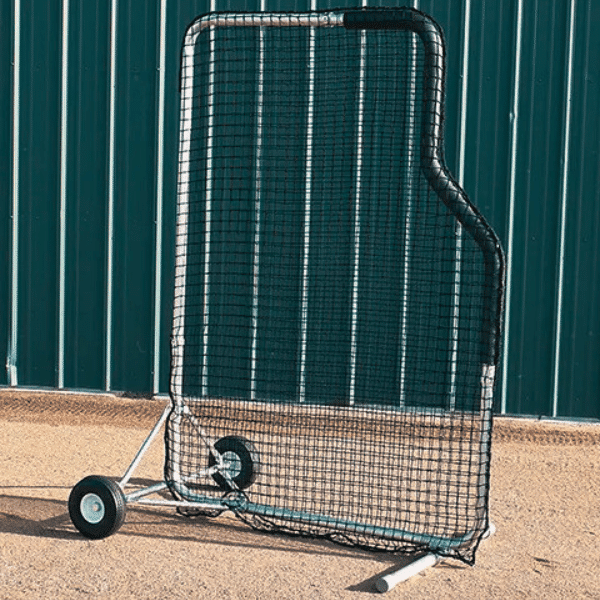
Pitching Pro L Screen with Wheel Kit & Padding | 5′ W x 7′ H
$770.00 -
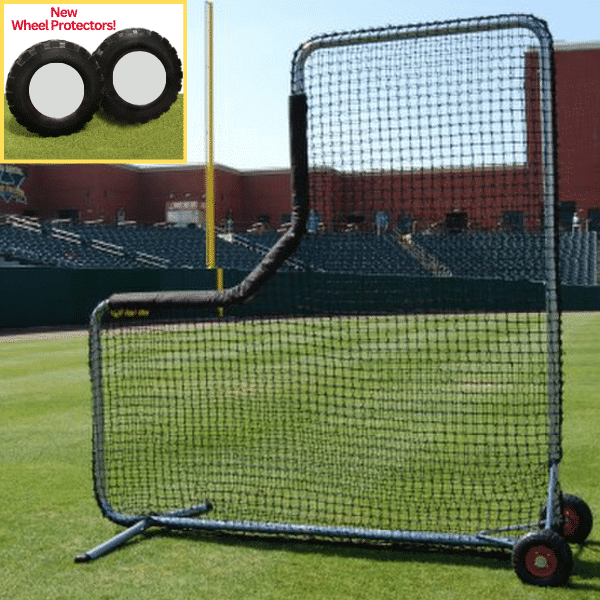
Pro Baseball L Screen With No Flat Wheels | 8′ x 8′ | Our Heaviest #96 Net
Price range: $990.00 through $1,210.00 -
Compact 5′ x 7′ Pro L Screen With Wheels & Padding | Heavy #60 Net
Original price was: $790.00.$720.00Current price is: $720.00.
🥎 Equipment Tip
Choose equipment that works together as a system—not individual pieces that solve only one problem.
Portable equipment gives coaches the flexibility to adapt practice layouts without increasing setup time.
Organizing Large Baseball Programs
As programs grow, organization becomes even more important.
Large rosters create additional challenges:
- More players
- More baseballs
- More equipment
- More coaches
- More movement
Without a system, practices quickly become inefficient.
Divide Players Before Practice Begins
Instead of assigning stations after practice starts, organize players into groups before warm-ups begin.
Each group should know:
- their first station
- their coach
- their rotation order
This simple step dramatically reduces downtime.
Use Equipment to Build Multiple Active Stations
Rather than having thirty players waiting at one batting station, organize several active stations across the practice area.
Each station should have:
- designated equipment
- assigned coach
- clear objective
- defined rotation time
The result:
More swings.
More instruction.
Less waiting.
🛡️ Safety Tip
Always position batting stations so every hitter is swinging in the same direction.
Players waiting their turn should remain behind the active hitting areas—not in front of them—to help maintain a safer practice environment.
Key Takeaways
⚾ Organized equipment saves valuable practice time and increases player development.
⚾ Preparing equipment before practice begins allows coaches to focus on teaching instead of setup.
⚾ Consistent station layouts reduce confusion and improve player movement.
⚾ Portable batting cages and batting turtles help create organized, efficient practice stations.
⚾ Clearly assigned equipment responsibilities keep practices running smoothly.
⚾ Organized storage extends the life of baseball equipment.
⚾ Large baseball programs benefit from standardized practice systems.
⚾ Equipment organization improves both safety and practice efficiency.
⚾ Athletic directors benefit from equipment that is durable, portable, and easy to manage.
⚾ Great baseball programs are built on organized systems, not last-minute preparation.
Frequently Asked Questions
How do you organize baseball equipment for practice?
The best approach is to organize equipment before players arrive, assign dedicated practice stations, and store similar equipment together. A consistent setup reduces downtime and allows coaches to focus on player development.
What equipment helps organize baseball practice?
Portable batting cages, batting turtles, ball carts, hitting mats, L-screens, baseball buckets, and station markers all help create a more organized and efficient practice environment.
Why is equipment organization important?
Organized equipment reduces setup time, improves player safety, increases repetitions, and creates smoother practice transitions.
How do coaches organize large baseball practices?
Most coaches divide players into small groups, assign stations before practice begins, and rotate players through timed practice stations.
How should baseball equipment be stored?
Equipment should be cleaned after practice, inspected regularly, and stored together in designated areas such as equipment trailers, storage sheds, or organized dugout spaces.
What equipment saves the most practice time?
Portable batting cages, batting turtles, ball carts, hitting mats, and organized storage systems help coaches spend less time setting up and more time coaching.
How do athletic directors manage baseball equipment?
Athletic directors often focus on equipment that is durable, easy to move, supports multiple teams, and provides long-term value for the program.
What is the biggest equipment organization mistake coaches make?
Waiting until practice begins to organize equipment. Setting up before players arrive creates a more productive and organized practice.
How can equipment improve player development?
Well-organized equipment allows coaches to create multiple active stations, increasing repetitions and reducing time spent waiting between drills.
Why should equipment have designated storage locations?
Giving every piece of equipment a permanent storage location reduces setup time, prevents misplaced equipment, and helps coaches maintain consistency throughout the season.
Build a Better Baseball Program
For more than 25 years, Baseball Turtles has helped high schools, colleges, universities, youth organizations, training facilities, and professional baseball programs build more organized and efficient practice environments.
Whether you’re outfitting one field or coordinating equipment across an entire baseball program, we’ll help you choose the right portable batting cages, batting turtles, and practice equipment for your team, facility, and budget.
We understand that every program has different space, staffing, and purchasing requirements. Our team is here to answer questions, recommend equipment, and provide quotes that fit your program’s needs.
Schools, colleges, universities, and municipal organizations are welcome. Purchase Orders (POs) are accepted.
⚾ Ready to Organize Your Baseball Program?
Call 828-820-8644 to speak with one of our baseball practice equipment specialists, or Request a Quote online. We’ll help you create a safer, more organized practice environment that saves time, improves player development, and supports your program for years to come.
Our Lineup
Rollaway Batting Cages & Baseball Turtles
TURTLE BATTING CAGE PARTS
BATTING PRACTICE ACCESSORIES
READ MORE:
- How to Run More Efficient Batting Practice
- Best Portable Batting Cage for High School Baseball Programs
- Best Baseball Practice Equipment for Daily Team Use
- How Baseball Coaches Organize Efficient Multi-Station Batting Practice
- How to Plan an Efficient Baseball Practice That Maximizes Player Development