
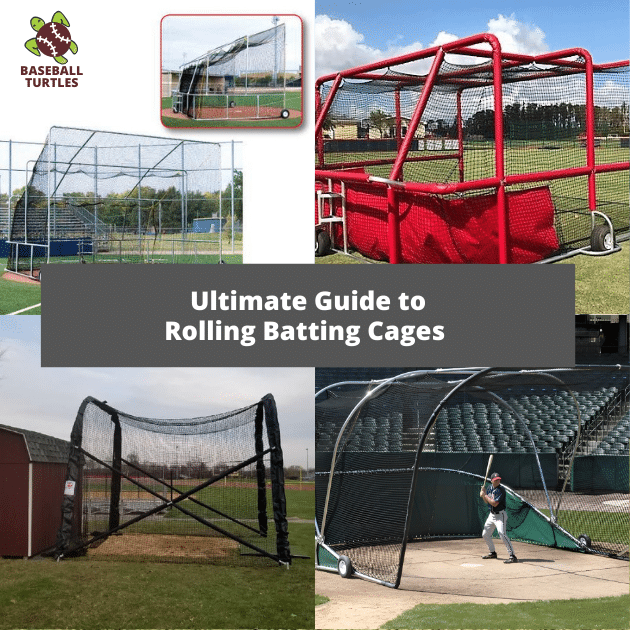
TL;DR: Rolling batting cages are portable, wheeled enclosures that contain batted balls during practice, cutting retrieval time by up to 70% and letting players focus on repetitions. They set up in minutes, move anywhere on the field or indoors, and give programs at every level a safer, more efficient training environment than permanent cages.
What Is a Batting Cage?
A batting cage is an enclosed structure made of netting and a frame that surrounds a hitter during practice, keeping batted and pitched balls contained in a defined area. The cage creates a controlled training space where a batter can swing repeatedly without balls scattering across the field. Cages range from permanent structures anchored into the ground to portable, rolling units that move wherever your practice needs them. If you have ever spent a full practice hour watching players chase foul balls instead of taking swings, a batting cage is the piece of equipment that solves that problem directly.
Programs at every level, from youth recreation leagues to college and professional organizations, rely on batting cages as a core part of daily training. The right cage gives coaches a repeatable environment where they can observe mechanics, give feedback, and track improvement over time. You can learn more about institutional batting equipment durability standards to understand what separates cages built for casual use from those built for daily, high-volume programs.
What Are Batting Cages Used For?
Batting cages are used to give hitters safe, uninterrupted repetitions during practice by containing every batted ball inside the netting. That single function creates a chain of practical benefits: fewer balls to chase, more swings per session, safer practice areas, and better coach focus on instruction rather than logistics.
Here is a breakdown of the most common uses:
- Live batting practice: Pitchers throw to hitters in a confined space so balls stay in the cage.
- Tee work: Hitters repeat swing mechanics off a tee with no retrieval delays.
- Soft toss: A coach or partner tosses from the side while the cage contains all contact.
- Machine work: Pitching machines deliver consistent pitch speeds while the cage controls ball scatter.
- Multi-station practice: Programs position multiple cages on the field at once so larger groups rotate through hitting stations simultaneously.
Rolling cages in particular are used for on-field team practice because they can be repositioned within minutes. Check out the complete guide to rolling portable batting cages for on-field team practice for a deeper look at how programs structure these sessions.
How Do Batting Cages Work?
Batting cages work by surrounding the hitter and the target zone with high-strength netting attached to a rigid frame, so every batted ball stays inside the structure instead of traveling freely across the field. The netting absorbs impact, and the frame keeps the netting taut and properly positioned around the hitting zone.
The basic mechanics are straightforward:
- A frame, typically made of steel or heavy-duty aluminum, forms the skeleton of the cage.
- Netting is attached to and tensioned across the frame, covering the sides, top, and back of the enclosure.
- The open end faces the pitcher or pitching machine.
- The hitter stands near home plate inside or just inside the open end.
- Pitched or tossed balls enter through the open end, the hitter makes contact, and the netting catches and holds the ball.
- On rolling models, heavy-duty caster wheels on the base frame let one or two people push the entire structure to a new location without disassembling anything.
Traditional batting practice wastes 60 to 70 percent of available time on ball retrieval. In a one-hour session, that can leave players with only 20 minutes of actual hitting time. A batting cage eliminates that waste by keeping every ball in one place, so coaches can run twice as many hitting reps in the same window. That direct increase in repetitions is what accelerates skill development faster than any other single equipment change.
For programs that need to understand netting specifications and frame construction before buying, the batting cage parts and accessories page covers the components that determine cage performance and longevity.
What Is a Batting Turtle? Essential Guide for Baseball Coaches
A Batting Turtle is a portable, rolling batting cage specifically designed to be moved on a field without disassembly, combining a rigid steel frame, containment netting, and heavy-duty wheels into a single unit that one or two people can reposition in minutes. The name comes from the shape: a rounded, shell-like netting structure over a wheeled base that rolls across turf or dirt the way a turtle moves, slowly but with everything it needs on its back.
For coaches, the Batting Turtle solves a problem that permanent cages cannot: the need to move practice stations to different spots on the same field during a single session. You can run infield work, set up a live arm station, and run a machine station all on the same field simultaneously, then roll the cage to storage when practice ends.
Key facts about Batting Turtles that coaches need to know:
- Built for institutional, high-frequency use, not occasional backyard sessions.
- Frames are steel construction rated for daily use in demanding program environments.
- Wheels are sized for real field surfaces, including natural grass and artificial turf.
- They arrive largely pre-assembled so setup time is minimal.
- Multiple size options exist to match different age groups and practice formats.
You can explore the full portable batting cages and turtles product line to compare sizes and configurations. The baseball batting turtles page covers baseball-specific models, and the portable batting turtles guide walks through how these units function in real practice settings. If you want to see one in action before committing, the pro batting cage turtle video shows exactly how the unit moves and sets up on a field.
How to Use a Batting Cage to Get the Most from Every Rep
To use a batting cage effectively, position it so the open end faces your pitcher or pitching machine, place home plate at the correct depth inside the cage, and run hitters through structured rotations so the cage stays in continuous use throughout practice.
Here is a step-by-step approach that works at the high school level and above:
- Position the cage correctly. Roll the cage to your chosen field location. Align the open end toward the pitcher’s area. Make sure the batter will stand at the proper distance from the back net based on your age group and cage depth. The optimal cage depth guide gives specific measurements for different ball speeds and pitch distances.
- Set home plate position. Place a portable home plate inside the cage at the correct distance so hitters practice from a realistic stance.
- Run structured rotations. Assign a set number of pitches or swings per hitter, then rotate. Keep the cage moving with players rather than letting it sit idle between hitters.
- Use the cage for multiple drill types. Tee work, soft toss, live arm, and machine sessions all work in the same cage. Changing drills does not require moving the cage.
- Adjust position between drill blocks. Because the cage rolls, you can shift it to an opposite-field hitting angle or move it to another field zone in a few minutes without tools.
- Store the cage off the field when done. Roll it to a storage area or sideline position so the field is clear for other uses.
Safety is a direct benefit of correct cage use. Wild hits and overthrown balls stay inside the netting, which is especially important when multiple stations are running on the same field at the same time. Younger players gain confidence training in a contained space, and coaches can position themselves close to hitters without worrying about stray balls from other groups.
The portable batting cages improve practice page covers specific practice formats that experienced programs use to get maximum value from cage time.
How to Get Started with Batting Cage Activities at Your Program
To get started with batting cage activities, identify your program’s practice volume, field space, and budget, then choose a portable cage model rated for that level of use before building a rotation plan that keeps every hitter moving through the cage efficiently.
Follow these steps to launch a batting cage program the right way:
- Assess your current practice structure. How many players need hitting reps per session? How many practice days per week? High-volume programs need heavy-duty institutional equipment that holds up to daily use.
- Review equipment options and costs. The batting cage cost page breaks down price ranges and what factors drive cost differences so you can plan your budget accurately.
- Read the buying guide before purchasing. The portable batting cage buying guide covers every specification that matters, from frame gauge to netting weight to wheel type, so you buy the right cage the first time.
- Consider your storage and transport needs. If you share a facility with other sports or need to move the cage between multiple fields, rolling models are the practical choice. Review the full rolling batting practice cage product category to see available configurations.
- Plan your first practice session. Start with one cage and one rotation group. Time how long each hitter takes. Adjust the rotation interval until the cage stays in near-constant use. Then scale up to multiple cages as your program grows.
- Consider year-round use from day one. Programs in colder regions that plan for indoor use from the start get more value from their investment. The home plate portable hitting cage is a model designed for both outdoor field use and indoor gym environments.
Year-round access to cage work is one of the clearest competitive advantages a program can build. When your players are taking structured swings in January and the opposing team is not, that gap shows up in April. Many recreation departments, school programs, and club organizations across the country have made the investment in portable rolling cages specifically because the equipment pays back in player development over a full calendar year, not just the season.
Portable vs. Stationary Batting Cages: The Mobility Advantage
Portable rolling batting cages offer flexibility, lower cost, and multi-field usability that permanent stationary cages cannot match, while stationary cages provide maximum structural permanence for programs with dedicated, fixed batting facilities.
| Factor | Rolling Portable Cage | Permanent Stationary Cage |
|---|---|---|
| Setup time | Minutes, no tools required | One-time construction, permits often required |
| Repositioning | Move anywhere on the field in minutes | Fixed location, cannot be moved |
| Storage | Roll to sideline or storage area | Occupies field space permanently |
| Indoor use | Yes, roll into gym or warehouse | No, structure is fixed outdoors |
| Upfront cost | Lower, no construction or permits | Higher, construction and installation costs |
| Shared use across fields | Yes, transport between locations | No, one fixed location only |
| Program scalability | Add units as program grows, move if program relocates | Requires new construction if needs change |
| Multi-sport facility compatibility | Clears field for other sports and events | Permanently reduces usable field space |
For most high school, club, and recreation programs that share fields with other sports or need to move equipment between venues, portable rolling cages deliver better practical value. Permanent cages make sense when a program has a fully dedicated batting facility with no competing uses for the space. Programs that share fields or want year-round indoor and outdoor use consistently find that portable cages give them more flexibility without sacrificing practice quality.
The ultimate guide to rolling backstops for baseball programs covers how programs at different levels structure their mobile cage setups for on-field efficiency.
Key Features of Quality Portable Backstops
Not all rolling batting cages are built to the same standard, and the difference between a cage that lasts one season and one that handles daily institutional use for years comes down to five specific features: frame material and gauge, netting weight and knotted versus knotless construction, wheel type and load capacity, ease of assembly, and overall cage dimensions matched to your use case.
Frame Construction
Steel frames outperform aluminum in high-use institutional settings. Look for welded joints rather than friction-fit connections, which loosen over time under repeated movement and impact. Frame gauge matters: thicker steel handles the stress of daily repositioning on real field surfaces without bending or cracking.
Netting Quality
Netting weight, measured in ply, determines how long the net lasts under daily ball impact. Heavier netting resists wear longer and handles higher-velocity contact without tearing. Knotted netting is generally more durable for institutional use than knotless options. UV treatment on the netting extends outdoor life significantly in sun-heavy climates. The batting cage parts and accessories page covers netting specifications in detail so you can match netting weight to your pitch velocity and usage volume.
Wheels and Rolling System
Wheel diameter and material determine whether the cage moves smoothly on grass, dirt, and turf or gets stuck and tips. Large-diameter, heavy-duty caster wheels rated for the total weight of the cage plus netting are non-negotiable for real field use. Locking casters keep the cage stationary during practice so it does not drift during live hitting sessions.
Cage Dimensions
Cage depth directly affects ball containment at different pitch speeds and ages. A cage that is too shallow lets balls hit the back net with dangerous force or misses containment on sharply hit balls. The optimal cage depth guide gives specific depth recommendations based on player age, pitch speed, and drill type so you can choose a cage size that actually works for your program.
Assembly and Portability
A cage that takes 45 minutes to set up does not get used. Look for units that arrive pre-assembled or near-complete, with rolling capability built into the base frame so no additional dollies or carts are needed. The best rolling cages require one or two people to move and need no tools to reposition between practice stations.
Quick Recap
- A batting cage is a netted enclosure that keeps batted balls contained during practice, eliminating the retrieval time that wastes 60 to 70 percent of traditional batting practice sessions.
- Rolling portable batting cages add wheels and a mobile frame so you can reposition the cage anywhere on the field or move it indoors in minutes without tools.
- A Batting Turtle is a specific type of rolling portable cage built for institutional, high-frequency use with heavy-duty steel frames and large-diameter wheels rated for real field surfaces.
- To use a batting cage effectively, align the open end toward the pitcher, set home plate at the correct depth, and run continuous hitter rotations to keep the cage in use throughout practice.
- Getting started requires assessing your practice volume and budget, reviewing equipment specifications in the buying guide, and building a rotation plan before your first session.
- Portable cages beat permanent cages on cost, flexibility, multi-field use, indoor capability, and storage, making them the right choice for most high school, club, and recreation programs.
- Quality features to look for: heavy-gauge steel frames, high-ply UV-treated netting, large locking caster wheels, and near-complete factory assembly.
- Programs that invest in rolling cages report running twice as many hitting reps per session, directly accelerating player development across a full calendar year of practice.
Frequently Asked Questions
What size batting cage do I need for a high school program?
Most high school programs use cages that are 70 feet deep or longer to safely contain balls hit by players throwing and hitting at full velocity. Cage width of 12 to 14 feet accommodates right- and left-handed hitters without restricting swing mechanics. The optimal cage depth guide provides specific sizing recommendations based on your players’ age and pitch speeds.
How many batting cages does a program need?
A program with 15 to 20 players benefits from at least two rolling cages so coaches can run simultaneous hitting stations and keep more players active at the same time. Larger varsity and travel programs often run three or four cages to keep all players rotating through hitting reps during a single practice window.
Can rolling batting cages be used indoors?
Yes. Rolling cages move easily into gymnasiums, field houses, and warehouses, making them a practical solution for year-round hitting work in regions where winter weather limits outdoor practice. The home plate portable hitting cage is designed specifically for programs that use the same cage both outdoors on the field and indoors during off-season months.
How much do rolling batting cages cost?
Pricing varies based on cage size, frame gauge, netting weight, and wheel system. Institutional-grade rolling cages built for daily program use are a larger upfront investment than recreational models, but they hold up to the demands that lower-cost options cannot. The batting cage cost page breaks down price ranges and the factors that drive cost differences so you can plan your budget accurately.
How long does a quality rolling batting cage last?
A heavy-gauge steel frame cage with institutional-rated netting and proper maintenance can last many years under daily use. The frame typically outlasts the netting, and replacement netting is available so you can extend the life of a quality frame rather than replacing the entire unit. Choosing a cage built to institutional batting equipment durability standards from the start is the most cost-effective long-term decision.
What is the difference between a batting cage and a rolling backstop?
A batting cage fully encloses the hitter on the sides, top, and back. A rolling backstop is a portable net structure placed behind the hitter or at a specific field position to stop balls moving in one direction without fully enclosing the hitting area. Both are useful for different practice scenarios, and many programs use both. The rolling backstops guide explains how programs integrate backstops alongside cages in their practice setups.
Can one person move a rolling batting cage?
Most rolling batting cages are designed for one or two people to move without tools on flat field surfaces. Heavier institutional-grade models are easiest to move with two people, especially on natural grass or when moving across uneven terrain. The wheel system design is the key factor: large-diameter locking casters on a balanced frame make repositioning straightforward for a single coach or equipment manager.
Ready to Upgrade Your Program’s Hitting Setup?
Coaches and athletic directors who have switched to rolling batting cages consistently report the same result: more swings per practice, safer training environments, and players who develop faster because they spend practice time hitting instead of chasing balls. Whether you run a high school program, a club organization, a recreation department, or a college team, the right portable cage is a direct investment in how many quality reps your players get every single day.
Browse the full rolling batting practice cage product category to see available models, review the portable batting cage buying guide to nail down your specifications, and check the batting cage cost page to plan your budget. When you are ready to talk through which setup fits your program, give us a call at 828-820-8644. We work with programs nationwide and we will help you find the right equipment the first time.